On August 23 2013 I left Brisbane where I had been working for the past two and a half years. I had decided I wanted to climb Mt Everest, and to do so I would take ten months off work to train and climb in the Himalayas, Antarctica and the southern alps of New Zealand.
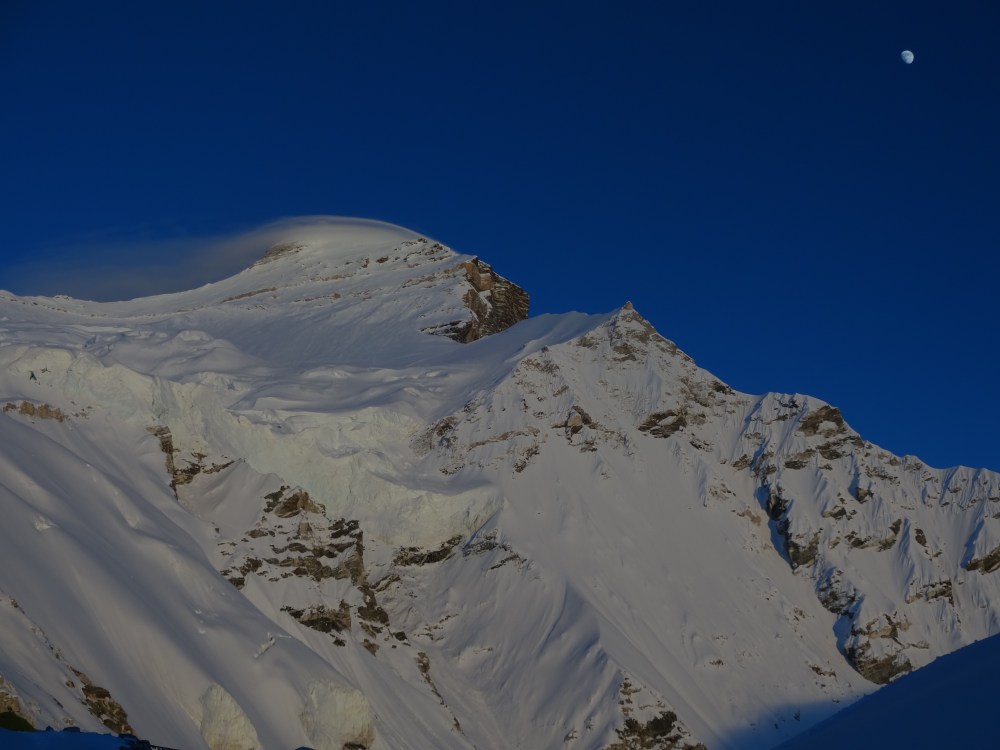
My first climb would be Cho Oyu, at 8201m the sixth highest mountain in the world. I departed Auckland on the 27th August leaving for Kathmandu. Here we arranged our Chinese visas, met the other IMG clients and guides and then hopped on board a bus headed towards Tibet via the Friendship Bridge. This is very well named indeed. Immigration involved ignoring the rifles pointed at us, then forfeiting any reading material we had unwittingly brought with us that mentioned the Dalai Lama. Don’t expect any smiles either. Once through we transferred to jeeps and soon arrived in Zhangmu where we spent the night.
Out of Zhangmu was a steep windy road almost completely backed up by trucks taking goods between Nepal and China. When we finally got clear of the town we quickly noticed some stark differences. We switched from driving on the left to driving on the right. The road slowly got better until it became a fairly modern highway. We started seeing Chinese flags everywhere, and the friendly vibe of Nepal was replaced with one of somber unwelcoming. My first impression – Tibet does not exist, there is only China.
We travelled on to Nyalam where we spent another night before doing an acclimatization walk the next day. This soon changed direction as we were turned back at a Chinese checkpoint where we witnessed a local Tibetan being dragged from his car and into the guard house.
Our floor at the hotel had no water – a problem for the toilets. The local Chinese merchants took our money for data on the chinese sim cards, but they never worked, and we were largely ignored by the staff who gave preference to Chinese customers buying lottery tickets. The food was not fantastic.
One more night, then onwards to Tingri via the Lalung La at 5150m. From this pass we had fantastic views of Shishapangma, another 8000m peak that was actually my original destination. We spent two nights in Tingri putting up with barking dogs, dusty streets and all the effects of being above 4000m and not yet acclimatised.
Next, Chinese base camp and the loss of our first team member. The altitude was 4910m, and this does not sit well with some people. We spent three nights here, doing hikes in the day under the watchful eye of a guardpost. No photos in that direction – unless you wished to be shot. Really.
The walk to advanced base camp took us through interim camp where a few black tents had been setup for some Tibetan families. We started seeing some smiles at last. There were children playing – an older sibling carrying her baby brother on her back. I was sure tears were imminent, but somehow they both stayed upright. There was tea. Lots and lots of milk tea.
A few more guard towers and you found it easy to understand how on the 30 September 2006 Chinese border security had opened fire on a group of Tibetans attempting to cross the Nangpa La into Nepal to join the Dalai Lama in India. Forty one of the seventy five made it into Nepal. One was killed. Seventeen are still “missing”. We spent six weeks staring out over the pass from our advanced base camp… no one ventured onto the snow in that direction.
Over the next month we made three rotations. Two for acclimatisation, then the summit push. First we went to camp one, spent the night, then returned. I felt that this first day was possibily the hardest I had had in the mountains. Then when we returned after a few days later it was fine. Acclimitisation is a wonderful thing.

From camp one at 6430m, we climbed up through the ice cliff to camp 2. This was a tough long day. Some people were turned back for moving too slowly. Camp 2 is at 7130m. Some guides believe the push is too long, and make a camp 1.5 between the two. These same guides would also put a camp .5 at the base of the cliff before camp 1. Soft!

There was an avalanche one day when the Sherpa were setting the fixed lines on the ice cliff. I climbed with both the guys involved on later trips. Karmarita from IMG and Sangay from Adventure Consultants. They were both sent off the mountain for medical attention in Kathmandu. Both are fine now.
We spent a lot of time visiting other camps. Adventure consultants, Adventure Peaks, Jagged glove, Alpine Glow and Amical. The Amical climbers invited us in for tea and cake. They were all super experienced and going without oxygen.
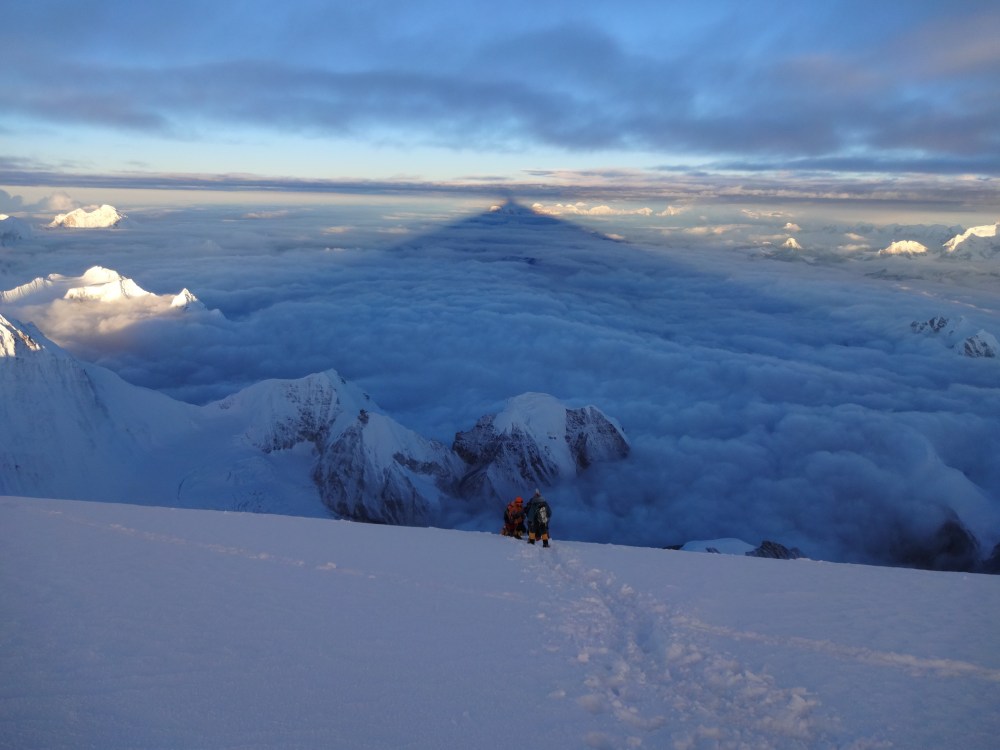
Summit rotation moves you from ABC, to camp 1, to camp 2, to camp 3. Camp 2 to camp 3 is unbelievably difficult. You don’t leave till early afternoon. It is only a three hour climb. The weather was perfect. However you are moving from 7130m to 7560m without oxygen. The effect being that you don’t have enough oxygen to keep you warm. Even though the sun was shining, I could not warm my hands up. By the time I reached our camp I crawled into the tent unable even to remove my crampons until I had defrosted my hands. In hindsight I always leave it too long before putting mittens on. My tentmate had gone up on oxygen and had moved at twice my speed, and without getting cold.
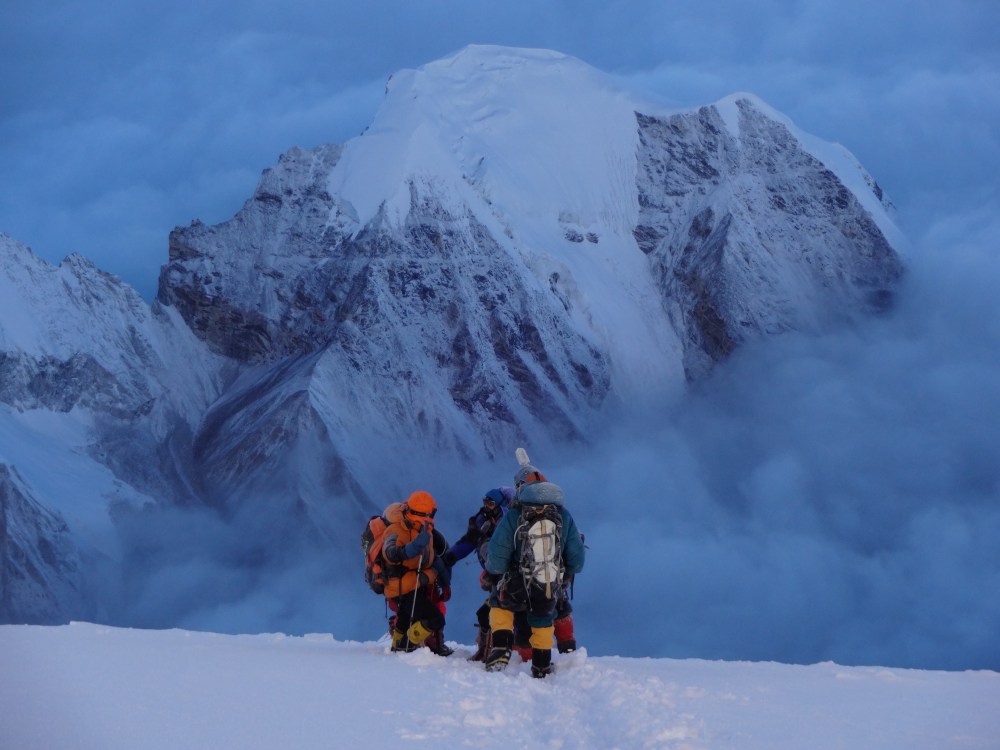
Summit push started that evening. October 31, 10pm alarm. There were three of us in our tent. Barely room to move. I slept with an oxygen bottle as my pillow, and another as an arm rest. I hadn’t managed to stop a leak on the splitter I was using to share my tank. I don’t think it really mattered though, three hours attempting to sleep wasn’t going to make much difference.
I had remembered to prepare my climbing bottle with a regulator the night before. However my tent mates had not. This meant they had had time to freeze, and on top of that I was pretty sure one of the threads was crossed. As they worked on the bottle, I started melting snow for our water. In doing this I had my feet outside the tent. Not ideal… they got cold.
We were supposed to depart at midnight, but it was 12.30 before I was ready. Water for three people takes time. I turned on my hotronics to warm my feet and stepped outside in my downsuit and La Sportiva Olympus Mons. Under the down suit I was wearing thermals, then climbing pants, on my upper body a thermal layer, then a light down jacket, then the suit. We were expecting a temperature of -30c. It was -10c. By the time I had moved 100m I was boiling. I put away the goggles immediately – eyes weren’t going to freeze in this.
Immediately that we set off, my Sherpa, Nima, had us in catch up mode. Through the yellow band where I was pleased to find some real climbing. It would be easy mixed climbing at sea level, but a bit more of a challenge close to 8000m when you can hardly see your feet through the oxygen mask. Later on the descent one of our climbers would be descending this when an anchor failed. She took a fall of a meter or so before the next anchor on the line held the slack. I didn’t envy her the experience.
By the time we hit the end of the fixed lines I had allowed my hands to get too cold in gloves again. We had been moving quickly – even overtaken our lead guide – but I should have stopped. With the mittens on I started to feel alright again. We soon hit the summit plateau where I thought Nima said we were nearly there. Turns out it is 45 minutes on that near flat plateau. You’d think it would be easy, but actually you are tired, and it feels like it goes forever. We got stuck in a queue, but the effort to overtake is astronomical. I think I tried once, then settled down to the slower pace.
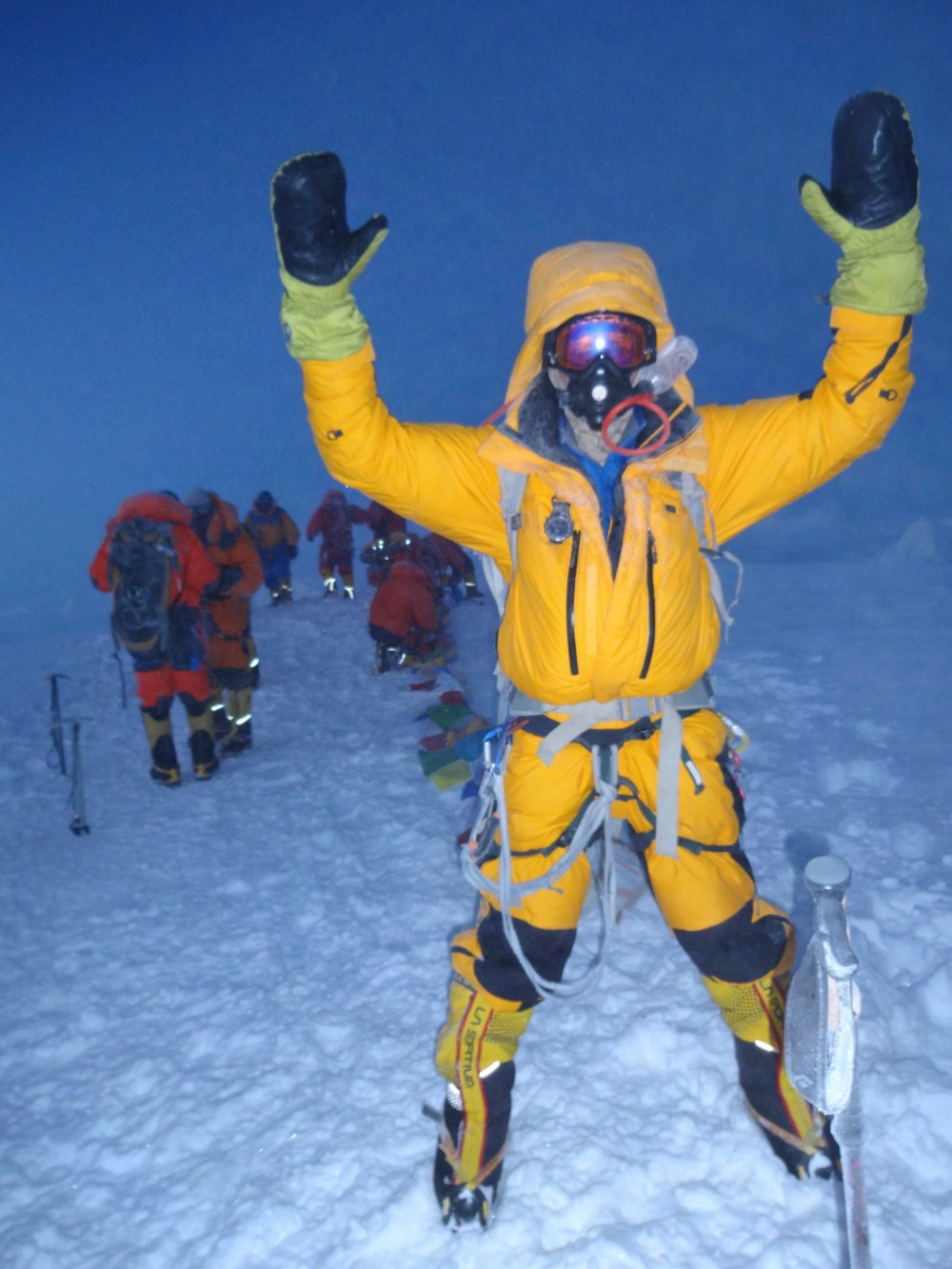
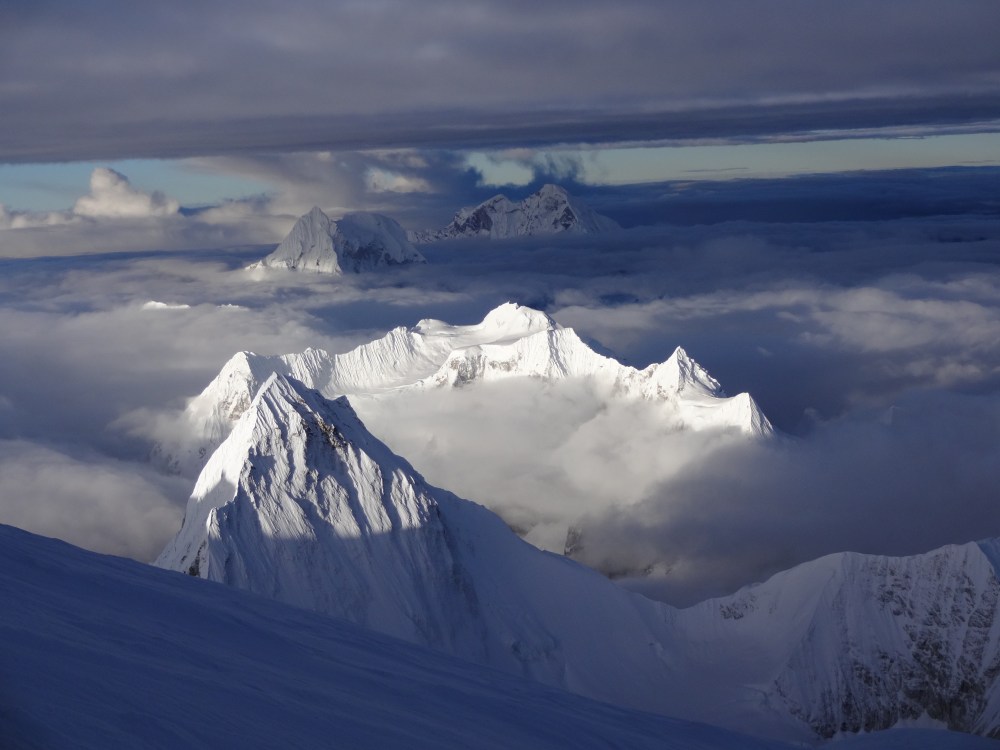
Summit 4.45am. It had taken five hours and fifteen minutes. I had been told between five and seven, so that was pretty good. It was still dark. Nima wanted me to immediately descend. I wanted photos. I waited till dawn, but there were no views of Everest. I took photos almost the whole way down. The camera froze with the lens out.

I sat at camp three for a while and waited for other climbers. The Sherpa smoked. We then descended to two where we climbed back into a tent to wait. And sleep. The guide must have fallen asleep because it was hours before we were on the move again. This time fully loaded up. Coming up the mountain you bring things slowly over multiple trips. Coming down everything has to go in a single push. My sixty five litre pack felt too small. When I arrived at the ice cliff there didn’t seem much point in going over the rappel if there was no one coming up – so I descended down the uphill route. This meant I could go forwards. Mingma was ahead of me doing the same thing. Except his load was so huge he could barely walk. I was quite relieved when he got to the bottom without incident.
Just before our camp I ran into Phoebe, and was offered chocolate as I waited for others in my team. I was in bed by 5.50pm. It had been a 19.5 hr day.
The next day the weather was not as good. Amical made their attempt. We heard over the radio that it went badly. One climber had been left behind below the ice cliff and had spent the night out alone. The rest were trapped in a higher camp by new snow. I didn’t see them brought out, but apparently there was some very serious frost bite. We had been lucky. My first 8000m peak achieved and I was injury free.
 Climb The Seven